
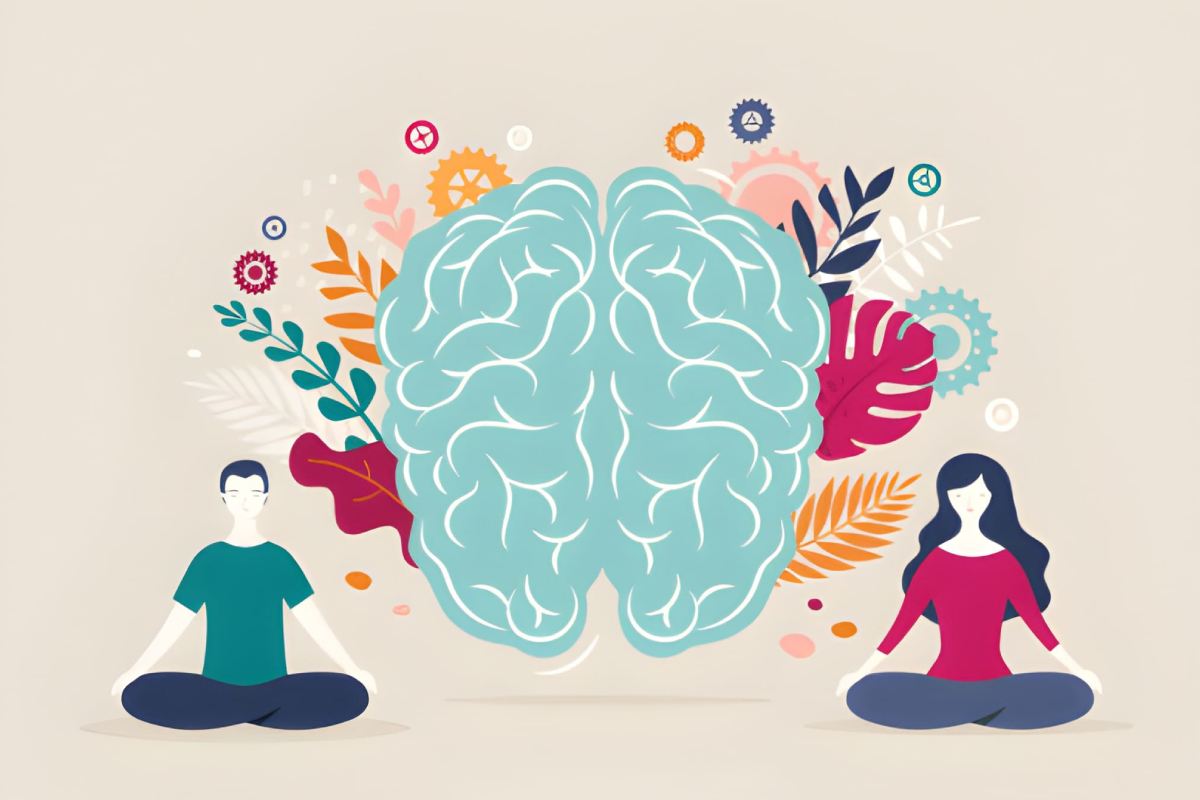
In the modern era, the conversation surrounding health has undergone a seismic shift. For decades, the primary focus was on the physical body—heart rate, cholesterol, and body mass index. However, we have entered an age of “The Great Reflection,” in which we recognise that the mind is not just a passenger in the body but the captain of the ship.
Mental well-being is no longer a luxury or a niche interest; it is the fundamental foundation upon which a functional, happy life is built.
Mental well-being is far more than the absence of mental illness. It is a state of flourishing in which an individual realises their own skills, can cope with the normal strains of life, works productively, and contributes to their community. It is a dynamic spectrum that fluctuates based on internal chemistry, external environments, and personal habits.
The Pillars of Mental Well-being: Understanding the Core
To build a resilient mind, one must understand the pillars that support it. A complex interaction of biological, mental, and social factors supports mental health.
Biological Factors: Our brain chemistry—neurotransmitters like serotonin, dopamine, and oxytocin—plays a massive role in how we feel. Genetics can predispose us to certain temperaments, but epigenetics shows that our environment and lifestyle can influence how these genes are expressed.
Psychological Resilience: This involves our internal dialogue and coping mechanisms. How do we interpret failure? Do we practice self-compassion or harsh self-criticism? Resilience is the “psychological muscle” that allows us to bounce back from adversity.
Social Connectivity: Humans are inherently tribal creatures. Isolation is a significant neurobiological stressor. Deep, meaningful connections provide a safety net that regulates our nervous system and provides a sense of belonging.
The Impact of the Digital Age on the Modern Mind
We are the first generation of humans living in a “hyper-connected” world, yet many report feeling more isolated than ever. The impact of the digital age on mental well-being is profound and dual-sided.
On one hand, technology provides access to mental health resources, teletherapy, and communities for rare conditions. On the other hand, the “attention economy” is designed to keep our brains in a state of constant dopamine-seeking. Social media often fosters “upward social comparison,” where we compare our “behind-the-scenes” footage to everyone else’s “highlight reel.”
The Gut-Brain Connection: Nutrition and Mental Health
Emerging research in nutritional psychiatry has revealed that the gut is essentially our “second brain.” About 95% of our serotonin—the hormone that regulates sleep, appetite, and mood—is produced in the gastrointestinal tract.
A diet high in processed sugars and trans fats can cause inflammation, which has been linked to higher rates of depression and anxiety. Equally, a diet rich in whole foods, omega-3 fatty acids, and probiotics supports a healthy microbiome. When our gut flora is balanced, it sends positive signs to the brain via the vagus nerve, stabilising our mood and improving cognitive function.
The Science of Stress and the Importance of Rest
Stress is not inherently “bad.” In short spurts, the “fight or flight” response helped our ancestors survive predators. However, in the 21st century, our predators are unread emails, mortgage payments, and traffic jams. These result in chronic stress.
When the body is constantly flooded with cortisol (the stress hormone), it leads to “allostatic load”—a wear and tear on the brain and body. This manifests as brain fog, irritability, and exhaustion.
Rest is the antidote, but rest is not just “doing nothing.” True mental rest involves:
- Sensory Rest:Disconnecting from bright lights and loud noises.
- Emotional Rest:Having the space to be authentic rather than “performing” for others.
- Social Rest:Spending time with people who nourish us rather than drain us.
Mindfulness and Meditation: Rewiring the Neural Pathways
One of the most significant breakthroughs in neuroscience is neuroplasticity—the brain’s ability to regroup itself by forming new neural connections throughout life. Mindfulness and meditation are the primary tools for intentional neuroplasticity.
Mindfulness is the practice of being present in the moment without judgment. By practising mindfulness, we shift from the “Default Mode Network” (the part of the brain accountable for rumination and worrying about the future) to the “Task-Positive Network.” Over time, studies show that regular meditation can physically shrink the amygdala (the brain’s fear centre) and thicken the pre-frontal cortex (the area responsible for decision-making and emotional regulation).
Creating a Sustainable Routine for Long-term Stability
Mental well-being is not a destination; it is a practice. Just as you wouldn’t expect to stay physically fit after going to the gym once, mental health requires daily maintenance.
A sustainable routine includes:
- Sleep Hygiene:Prioritising 7–9 hours of quality sleep to allow the brain to clear out metabolic waste (via the glymphatic system).
- Movement:Physical activity releases endorphins and reduces peripheral levels of cortisol.
- Creative Expression:Whether it’s journaling, painting, or gardening, “flow states” allow the mind to focus and decompress.
- Boundaries:Learning to say “no” is perhaps the most underrated mental health tool. Protecting your time and energy is a form of self-respect.
Conclusion: The Path Forward
Prioritising mental well-being is a radical act of self-preservation in a world that often demands we burn out. It requires a shift from being “reactive” (treating problems once they arise) to being “proactive” (building a resilient foundation daily). By understanding our biology, managing our digital intake, nourishing our bodies, and practicing mindfulness, we can navigate the complexities of life with grace and clarity.